
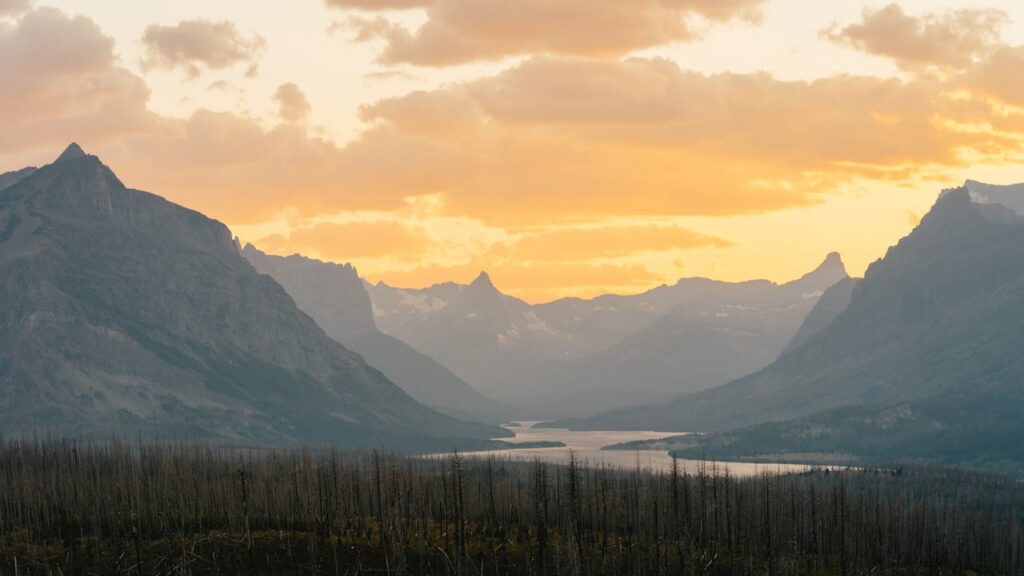
Camping in the North: The Ultimate Guide to America’s Wildest, Most Rewarding Backcountry
Table of Contents
Picture this: you unzip your tent at 5:30 a.m. and step into a world that smells of pine resin and cold lake water. The sky above the boreal treeline is already light — a pale greenish gold that tells you you’re far enough north that summer darkness barely bothers to show up. No road noise. No cell signal. Just a loon somewhere on the water, and the faint crackle of last night’s fire.
That is the promise of camping in the North — and it delivers in ways that no other region of the United States quite manages. This guide covers the essential terrain: the Great Lakes states, the Upper Midwest, the northern Rockies, and the vast wilderness corridors of Alaska and the Pacific Northwest borderlands. Whether you’re planning your first long-weekend escape or scouting a multi-week expedition, you’ll find the destinations, practical logistics, and hard-won field knowledge you need here.
What Makes Northern Camping Different
Camping in the northern United States — and into the subarctic fringe — is defined by a few things you won’t find further south: genuine wilderness scale, a shoulder season that rewards flexibility, and ecosystems that feel genuinely prehistoric in their density.
The northern tier runs from the Olympic Peninsula in Washington east through Idaho, Montana, the Dakotas, Minnesota, Wisconsin, Michigan’s Upper Peninsula, and on to the lakes and forests of Maine. These landscapes share certain qualities: short but intense summers, shoulder seasons that can swing from glorious to brutal within 48 hours, and an abundance of water in every form — glacial lakes, wild rivers, bogs, and in the highest elevations, permanent snowfields well into July.
Best overall camping seasons in the North:
| Region | Peak Season | Shoulder Season | Notes |
|---|---|---|---|
| Northern Rockies (MT/ID) | Mid-June – Sept | May, Oct | Snow possible at elevation year-round |
| Great Lakes (MN/WI/MI) | Late June – Aug | May, Sept–Oct | Black flies peak in late May–June |
| Pacific Northwest (WA/OR north) | July – Sept | June, Oct | Rain likely outside peak window |
| Upper New England (ME/NH/VT) | July – mid-Sept | June, early Oct | Foliage season in Sept is spectacular |
| Alaska | Late June – Aug | May, mid-Aug onward | 20+ hrs daylight in June; bears active |
Pro tip: The single best-kept secret in northern camping is the late-September window in the Great Lakes and New England. Crowds are gone, bugs are finished, foliage peaks, and temperatures are crisp enough to make a campfire feel essential rather than optional. Permits are far easier to secure.
The Northern Rockies: Montana and Idaho’s Backcountry Heartland
If you’ve camped in the Rockies south of Wyoming, the northern extension of the range will recalibrate your sense of scale. Glacier National Park, the Bob Marshall Wilderness, and the Frank Church–River of No Return Wilderness together comprise one of the largest contiguous wild areas in the lower 48 — a landscape where grizzly bears patrol river valleys and the trail system is genuinely remote enough that route-finding skills matter.
Glacier National Park, Montana
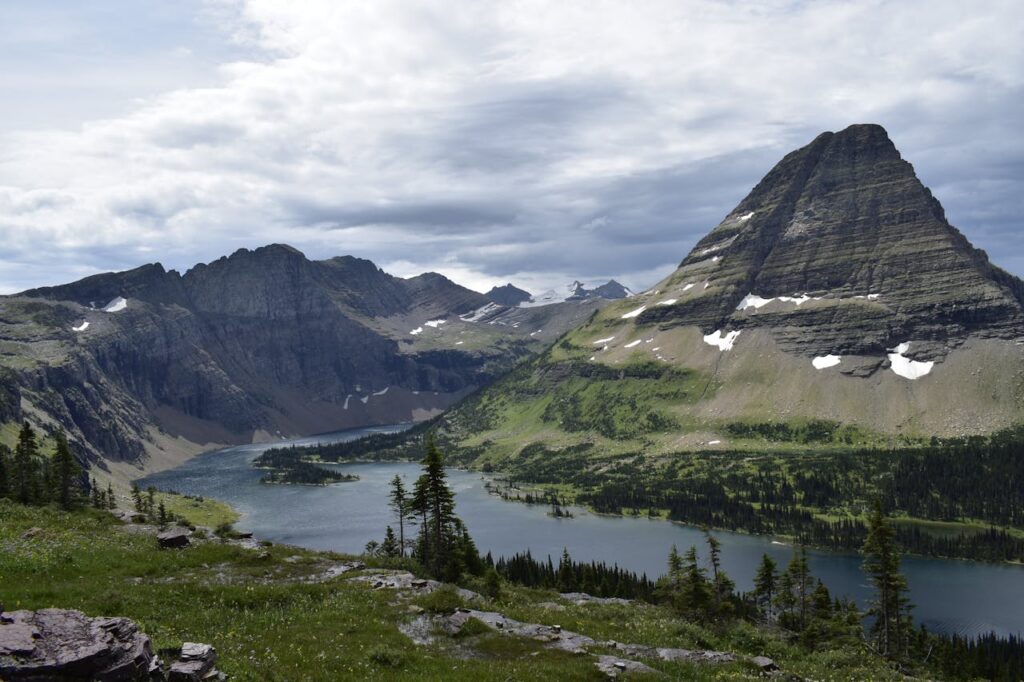
Glacier is the flagship, and it deserves the reputation — but the crowds at popular trailheads have forced the park to implement a vehicle reservation system for peak season access. Book early via recreation.gov if you’re visiting between late June and Labor Day.
What makes it distinctive: The Going-to-the-Sun Road corridor is spectacular, but the real camping reward is in the park’s backcountry permit system. Sites like Fifty Mountain and Goat Haunt (accessible by boat from Waterton, Canada) offer scenery that rivals anything in the Alps — glacier-carved cirques, wildflower meadows that peak in late July, and near-certain wildlife encounters.
Best time: Mid-July through August for snow-free access to high routes. September for solitude and golden larch color.
Permit system: Backcountry permits go live via recreation.gov in mid-March. They sell out within hours. Set an alarm.
Insider tip: The Kintla Lake campground in the park’s remote northwest corner requires a long drive on a dirt road, but it sits on one of the clearest lakes in Montana with almost no foot traffic. Car campers who can’t secure a backcountry permit should go here first.
The Bob Marshall Wilderness, Montana
“The Bob,” as it’s known to regulars, is the third-largest wilderness area in the lower 48 at 1.5 million acres. There are no roads inside. Access requires either a significant backpacking commitment or — uniquely for American wilderness — a horse-packing trip via one of the licensed outfitters who work the area.
What makes it distinctive: The Chinese Wall, a 1,000-foot limestone reef running for 22 miles along the Continental Divide, is among the most dramatic geological formations on the continent. Backcountry camps along the South Fork of the Flathead River offer fishing for native westslope cutthroat trout in water that remains genuinely pristine.
Best time: Late July through mid-September. Early entry (June) can mean marshy, horse-wrecked trails.
Suited for: Experienced backpackers, horse packers, and fly fishers prepared for genuine self-sufficiency. This is not a destination for beginners camping solo.
Pro tip: The Benchmark Wilderness Ranch trailhead on the southeast edge provides the most direct access to the Chinese Wall — roughly 16 miles in. Go midweek in August and you may share the Wall with nobody.
The Great Lakes: Minnesota’s Boundary Waters and Michigan’s Upper Peninsula
No region in the lower 48 offers a canoe camping experience comparable to the Boundary Waters Canoe Area Wilderness (BWCAW) in northern Minnesota. And across Lake Superior, Michigan’s Upper Peninsula (the UP) remains one of the most underrated camping destinations in the country — a place where waterfalls crash into Lake Superior and the inland wilderness is dense enough to get genuinely lost.
Boundary Waters Canoe Area Wilderness, Minnesota
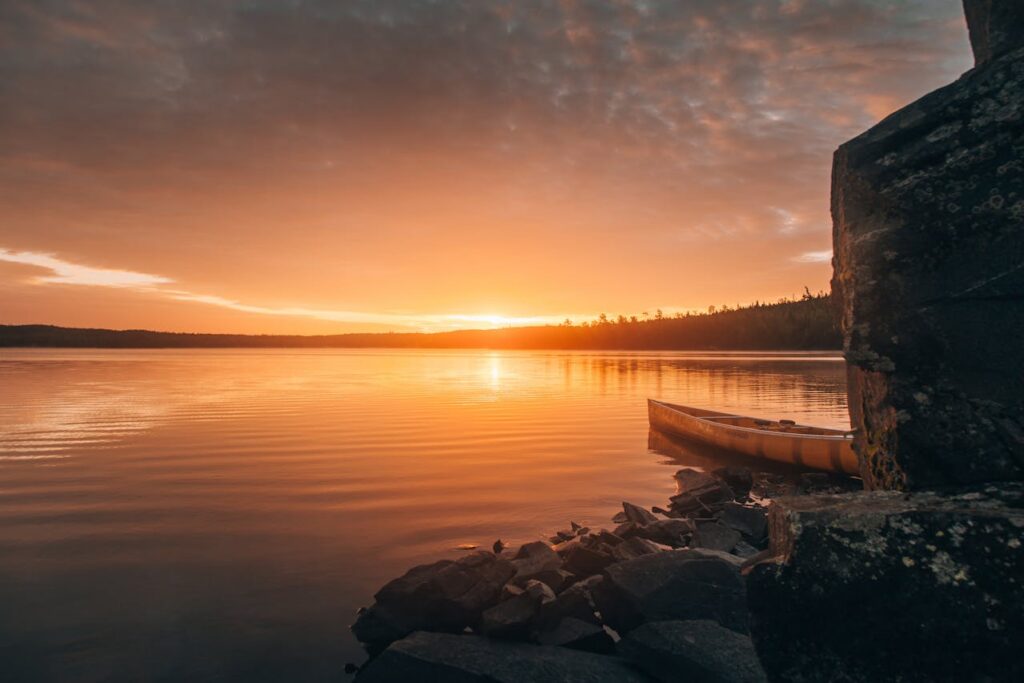
The BWCAW encompasses over a million acres and more than 1,200 miles of canoe routes threading through interconnected lake chains along the Canadian border. Camping here is done from a canoe — you paddle to your site, portage to the next lake, and navigate a landscape shaped entirely by water and glacier.
What makes it distinctive: The wilderness designation is real. No motorized vehicles, no motorboats on most lakes, no portage trails wider than a footpath. The night sky is among the darkest in the Midwest, and in winter, the aurora borealis is visible on clear nights. Moose sightings are routine; wolves less so, but present.
Best time: Late June (once the worst of black fly season passes) through mid-September. Peak color runs mid-September to early October and the canoe routes are magically empty.
Permit system: A quota permit system limits daily entries by entry point. Permits open in January and popular entry points (like Moose Lake) sell out within the first few days. Less-traveled entry points like Bog Lake or Bower Trout Lake often have permits available much later.
Insider tip: The permit system covers the entry point, not the specific route. Planning a loop rather than an out-and-back gives you flexibility to adjust based on wind conditions — significant on larger lakes where 2-foot whitecaps can pin you to shore for a day.
If you’re comparing northern wilderness camping to options further south, our guide to Camping in the Central Midwest covers more accessible gateway destinations while the BWCAW logistics are being sorted.
Pictured Rocks National Lakeshore, Michigan
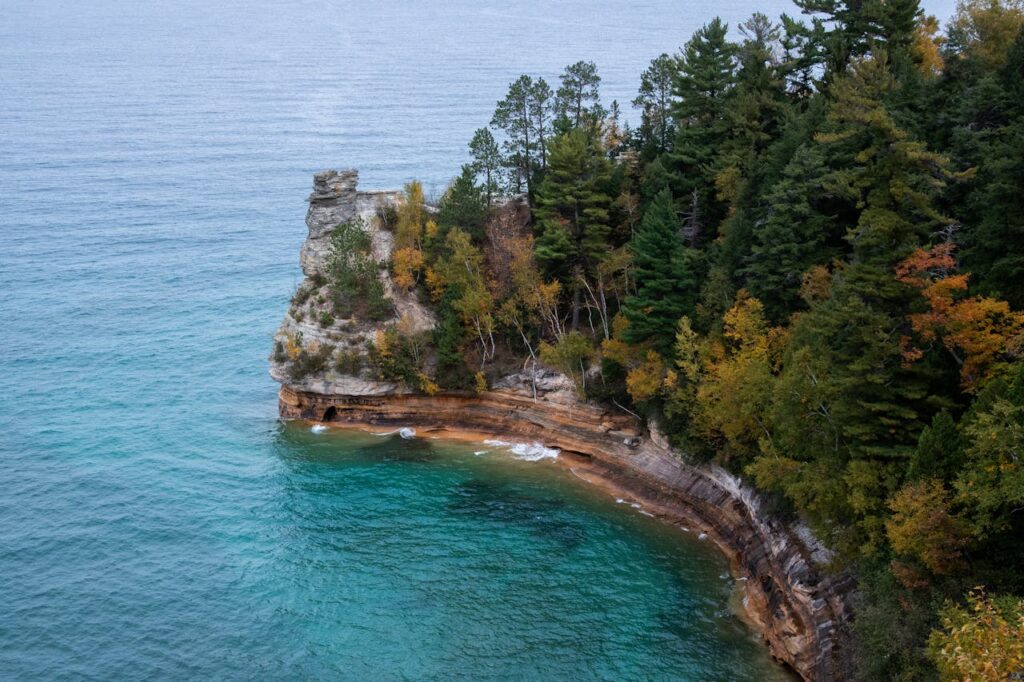
The UP’s south shore along Lake Superior produces some of the most visually arresting camping in the Midwest — 50-foot sandstone cliffs striped with iron, copper, and manganese deposits plunging directly into cold Superior water, with isolated backcountry campsites perched at the cliff edge.
What makes it distinctive: The combination of Lake Superior’s scale (it behaves like a cold inland sea) and the geological drama of the cliffs makes this feel unlike anything else in the Great Lakes region. The North Country Trail runs the length of the lakeshore and provides access to 13 backcountry camping zones.
Best time: July and August for stable weather. September is exceptional — the bugs are gone, Superior is at its warmest (relatively), and the hardwood ridges above the cliffs start turning.
Insider tip: Sites near Potato Patch and Twelvemile Beach are accessible enough to draw crowds. Head to the Beaver Basin Wilderness section in the park’s western half for near-total solitude even in peak season.
The Pacific Northwest: Washington’s Olympic Peninsula and the North Cascades
The Olympic Peninsula is a genuine anomaly — a place where temperate rainforest (recording over 140 inches of rainfall annually in the Hoh Valley) sits within 50 miles of rain-shadow desert and glacier-clad peaks. Camping here demands waterproof everything, a tolerance for mud, and a genuine appreciation for moss.
Olympic National Park, Washington
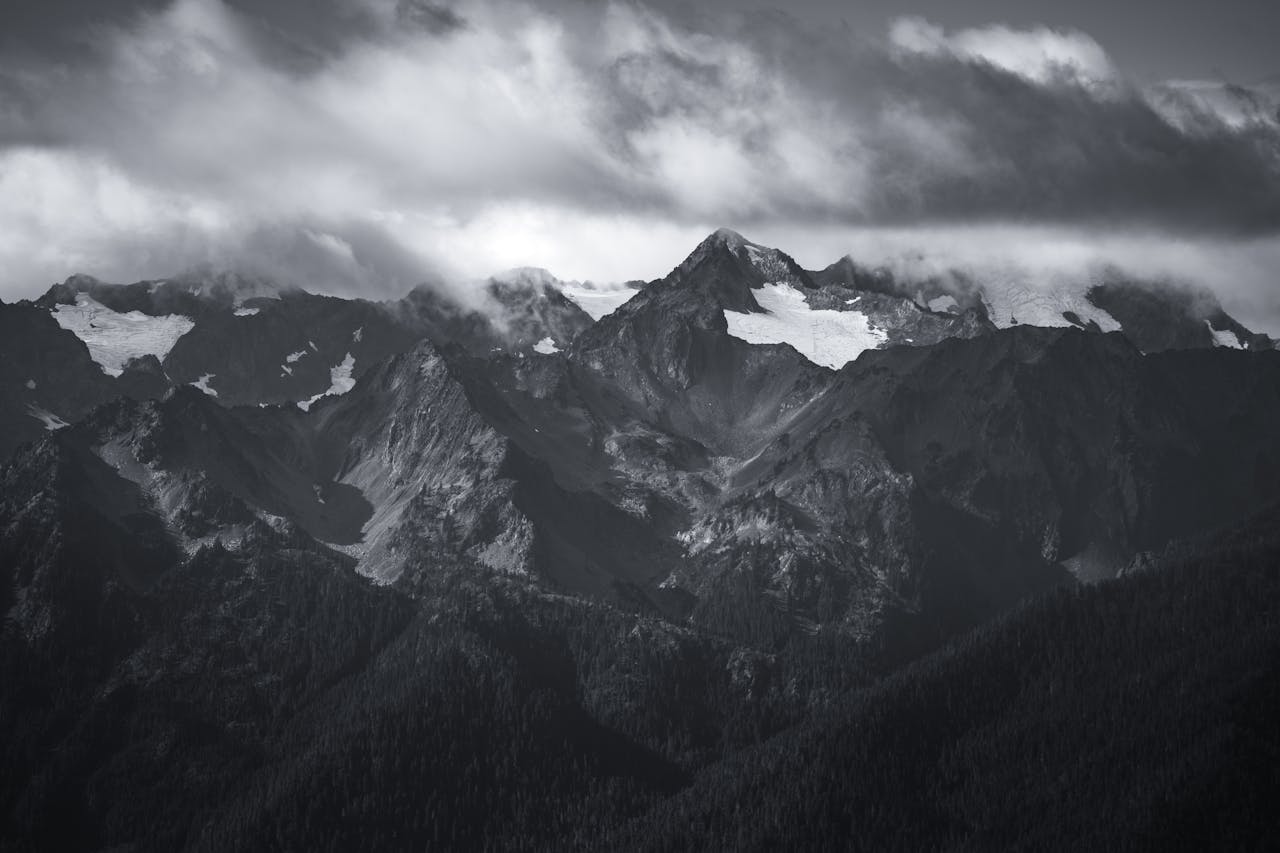
Olympic is one of the few national parks where you can camp in four completely distinct ecosystems within a single visit: ocean beach (with wilderness camping on isolated coves accessible only on foot), lowland temperate rainforest, subalpine meadow, and glacier terrain above 7,000 feet.
What makes it distinctive: The Hoh Rain Forest trailhead leads into one of only four temperate rainforests in the world. The Olympic Coast wilderness camping — particularly north of the Hoh River mouth — requires a permit and tide table literacy but rewards with absolute isolation on beaches that see fewer than 20 visitors a day even in summer.
Best time: July through September for high-elevation routes. The rainforest and coast are accessible year-round — winter camping in the Hoh Valley, while very wet, is genuinely haunting.
Practical note: Coastal campsites require advance reservations and a wilderness permit. Check the Olympic National Park site for tidal crossing information — some headland passages are only passable at low tide and miscalculating is dangerous.
Pro tip: The Dosewallips corridor on the park’s east side (Hood Canal side) is dramatically less crowded than the Hoh or Sol Duc corridors, with comparable scenery and better weather due to the rain shadow effect. It’s the insider route into the Olympic Mountains.
North Cascades National Park, Washington
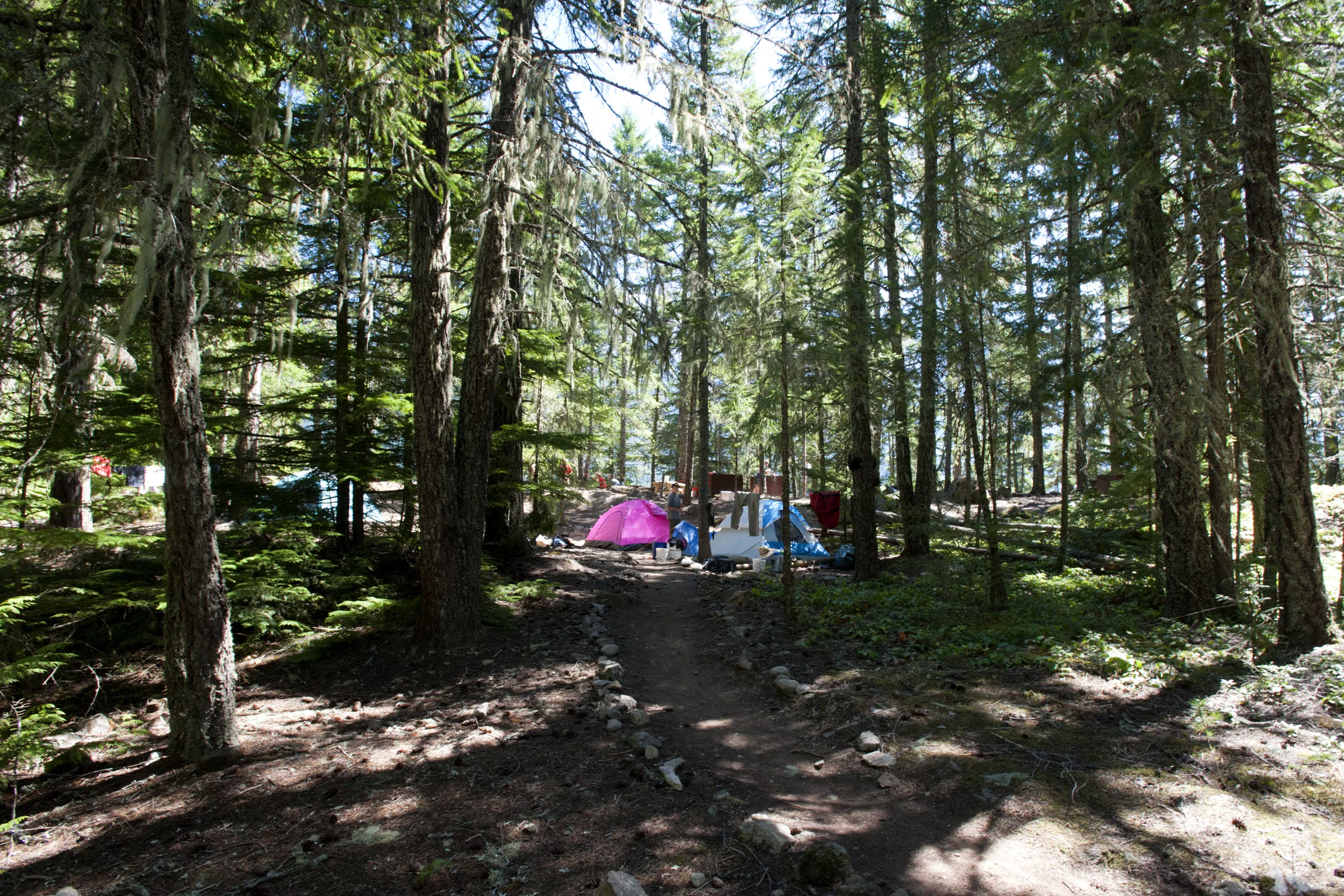
The North Cascades are the gnarliest mountains in the lower 48 — a landscape of near-vertical peaks, hanging glaciers, and valleys so deep and shadowed they receive sun for only a few hours a day. The park sees a fraction of the visitors Glacier or Rainier attracts, largely because access is harder and the terrain more demanding.
What makes it distinctive: The park contains more glaciers than any other area in the contiguous United States outside Alaska. The backcountry permit system is rigorous, and many routes require technical skills, but for experienced wilderness campers, the solitude-to-scenery ratio is unmatched in the Pacific Northwest.
Best time: Mid-July through mid-September. Many trailheads don’t fully open until late July due to snow.
Suited for: Experienced backpackers with navigation skills and bear canister compliance. Families and beginners are better served by the Colonial Creek and Gorge Lake car camping areas along Highway 20.
What Type of Camper Does Northern Camping Suit?
Northern wilderness camping rewards patience, preparation, and a genuine appetite for remoteness. Here’s a breakdown by camping style:
Solo backpackers and experienced pairs: The Bob Marshall, BWCAW, and North Cascades are genuine wilderness. Navigation, bear awareness, and self-rescue capability are not optional extras.
Family campers: Pictured Rocks, Glacier’s car camping corridors, and Olympic’s drive-in campgrounds at Heart O’ the Hills and Kalaloch all offer accessible sites with real wildness close by. The Kalaloch Lodge area is particularly well-suited for families — ocean beach, elk in the meadows at dusk, and solid facilities.
RV and car campers: Most national parks and national forests in the northern tier have developed campgrounds suited to RVs, though the largest rigs will find maneuvering difficult on older loop roads. Check Recreation.gov site listings for length restrictions.
Canoe campers: The BWCAW and Quetico Provincial Park (just across the Canadian border) are the gold standard globally. No other system in North America offers this quality at this scale.
For practical prep guidance, especially if this is your first time camping in genuinely remote terrain, our Camping Safety Tips article covers wilderness-specific hazards — from bear encounters to stream crossings — in detail.
Practical Logistics for Northern Camping
Gear considerations specific to the North:
- Sleeping bag: A 20°F bag is the minimum for three-season northern camping; 0°F for high elevation or early/late season. Down is lighter; synthetic is better when wet — a real consideration in the Pacific Northwest.
- Rain gear: In the Olympic Peninsula and North Cascades, treat waterproofing as non-negotiable, not optional.
- Bear canisters: Required in most BWCAW portage zones, Olympic backcountry, and North Cascades. Check specific permit conditions. Where not required, bear hangs are mandatory — know the PCT method.
- Bug protection: DEET (30%+) or permethrin-treated clothing for the Great Lakes region May through June. The black flies of the BWCAW are not a minor inconvenience — they’re a logistical condition.
Nearest gateway towns:
| Destination | Closest Town | Distance to Park | Notes |
|---|---|---|---|
| Glacier NP | Whitefish, MT | 25 miles | Full services, gear shops |
| BWCAW | Ely, MN | Varies by entry | Canoe outfitters, full resupply |
| Pictured Rocks | Munising, MI | Adjacent | Small town, limited gear |
| Olympic NP | Port Angeles, WA | 5 miles | Ferry from Seattle |
| North Cascades | Winthrop, WA | 50 miles (east) | Western approach via Burlington, WA |
Leave No Trace in Northern Ecosystems
Northern boreal and alpine ecosystems are disproportionately fragile relative to how they look. Subalpine soil crusts in Glacier and the Cascades can take decades to recover from a single off-trail footfall. Campfire scars on granite lakeshores in the BWCAW are permanent on any human timescale.
Follow Leave No Trace principles rigorously in these environments — more so than you might in developed campgrounds elsewhere. In the BWCAW specifically: no soap (even biodegradable) within 200 feet of water, no glass containers, and campfires only in established fire grates where they exist.
The Honest Word on Northern Camping
Camping in the North asks something of you. It asks for preparation — in gear, in navigation, in permit logistics that can require months of advance planning. It asks for weather tolerance. It asks you to sit with the discomfort of genuine remoteness, where the nearest help may be a day’s paddle or a 12-mile hike away.
What it gives back is proportional to what you put in. The BWCAW on a fog-quiet morning, the Chinese Wall at golden hour, the sound of a Superior wave breaking against a sandstone cliff at midnight — these are not experiences you approximate elsewhere. Camping in the North, done right, is among the finest outdoor travel available to anyone, anywhere.
Do the work. Get the permit. Go north.
If you’re still deciding between the northern tier and other American camping regions, our comparison guide Camping in the Southern vs Northern United States breaks down the key differences in terrain, season, and experience level by region.