
Camping in the South: The Best Wilderness, Beaches, and Bayous Across Dixie
Table of Contents
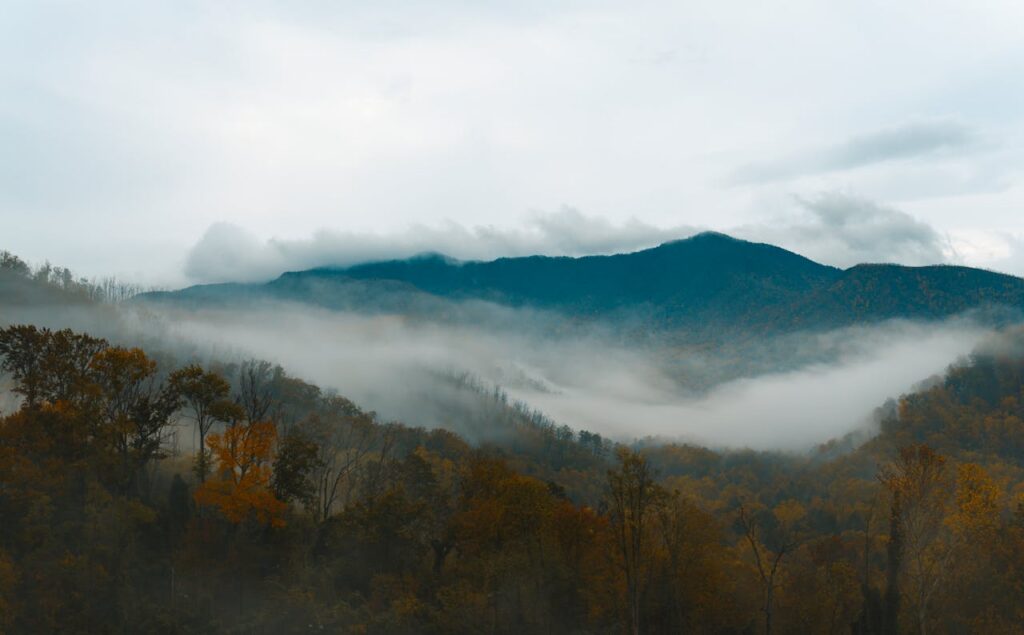
Pull off a gravel road in the Smoky Mountains at dusk, when wood smoke drifts through a stand of old-growth hemlocks and the first fireflies begin to pulse in the hollow below. Or launch a kayak from a sandbar on the Suwannee River while an osprey circles overhead. Or fall asleep on the Gulf Coast to the sound of waves dragging sand — and wake up to a sunrise that turns the water copper and pink.
Camping in the South is not a single experience. It is a dozen ecosystems layered on top of each other: Appalachian highlands, cypress swamps, pine savannas, barrier islands, limestone caves, and river corridors that drain half a continent. This guide covers the most compelling camping destinations across the region — from the Tennessee mountains to the Florida Panhandle, from the Ozarks to the Outer Banks — with the practical detail you need to plan a trip worth remembering.
Why the South Deserves More Credit as Camping Country
Most national outdoor conversations are dominated by the West — Yosemite, Glacier, the Colorado Plateau. The South tends to get overlooked. That’s partly because its landscapes are subtler, less photogenic in the postcard sense. But subtlety is the point.
The southern Appalachians contain more tree species than all of northern Europe. The Florida panhandle has beaches that rival — and by many measures surpass — anything in the Caribbean. The Ouachita and Ozark national forests of Arkansas and Oklahoma hold hundreds of miles of technical singletrack and wild river paddling. The bayous and bottomland hardwoods of Louisiana and Mississippi are genuinely other-worldly.
The South also camps long. Shoulder seasons here are real. March in the Smokies feels like early summer in Maine. November in Florida is flat-out perfect. Even January on the Gulf Coast can produce warm, quiet, nearly empty campgrounds that feel like a secret the rest of the country hasn’t found yet.
Pro tip: If you’re comparing camping experiences across different parts of the country, our guide to Camping in the Southern vs Northern United States breaks down the key climate, terrain, and planning differences in detail.
The Great Smoky Mountains: Appalachian Camping at Its Peak
Great Smoky Mountains National Park straddles the Tennessee–North Carolina border and receives more visitors than any other national park in the country — but most of those visitors never leave the main corridor. Step off it, and the crowds thin fast.
Elkmont Campground, Tennessee
Elkmont is the park’s largest and most accessible campground, situated in a valley along the Little River. It has electricity-free sites set among second-growth hardwoods, and the river is cold, clear, and walkable. The nearby Jakes Creek and Cucumber Gap trails give you genuine backcountry feel within two miles of camp.
Best time to visit: Mid-June for the synchronous firefly display — one of the natural wonders of eastern North America, when Photinus carolinus beetles pulse in coordinated waves across the valley floor. A lottery permit is required during the firefly event window; apply through recreation.gov in late April.
Insider tip: Book the riverside sites (numbers 1–15) specifically — the sound of the water drowns out neighboring camp noise entirely.
Cataloochee Valley, North Carolina
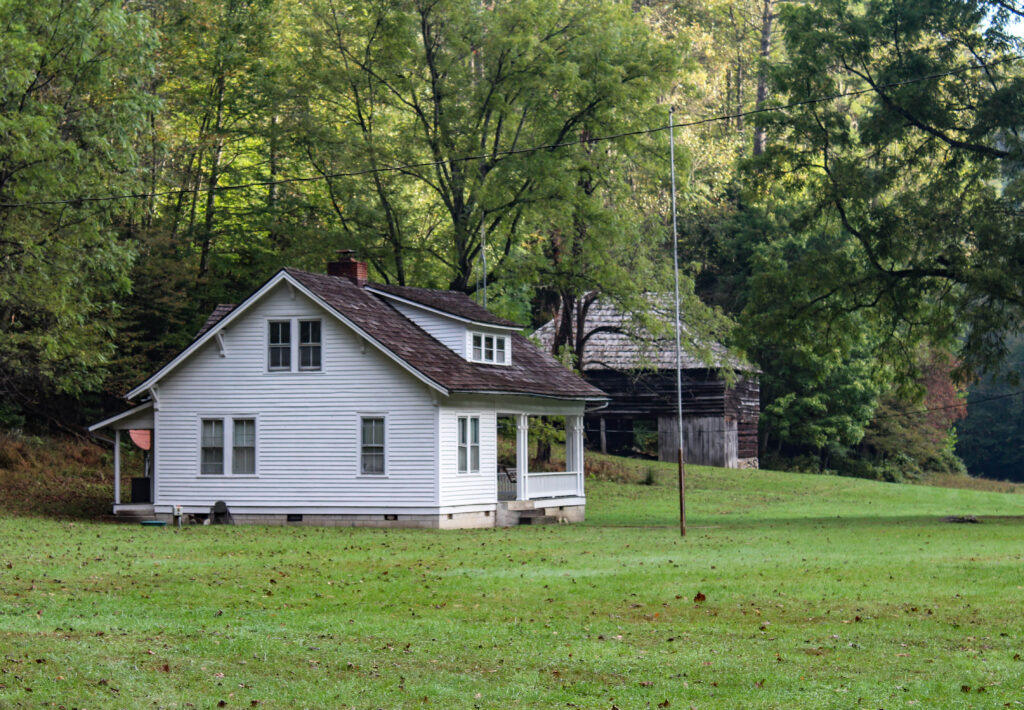
On the eastern edge of the park, Cataloochee is everything the main corridor is not: quiet, wild, and genuinely remote feeling despite being accessible by car. A herd of reintroduced elk now numbers over 200 animals and grazes the valley floor at dawn and dusk. White-tailed deer are so accustomed to people here that they’ll walk between your tent and your picnic table.
Best time to visit: September and October, when elk rut season brings bugling males and autumn colour arrives in the surrounding hardwood forest simultaneously.
Practical note: The road into Cataloochee is narrow and winding — 11 miles of unpaved surface. Passable in a standard car, but not recommended for large RVs or trailers.
Pro tip: Cataloochee fills to capacity on fall weekends within minutes of the reservation window opening (six months in advance on recreation.gov). Set a calendar reminder for your exact target dates.
The Blue Ridge Parkway: Car Camping Through a Living Landscape
The Blue Ridge Parkway runs 469 miles from Cherokee, North Carolina to Shenandoah, Virginia. The National Park Service campgrounds along it are accessible, affordable, and underused — especially compared to the anchor parks at either end.
Mount Pisgah Campground, North Carolina
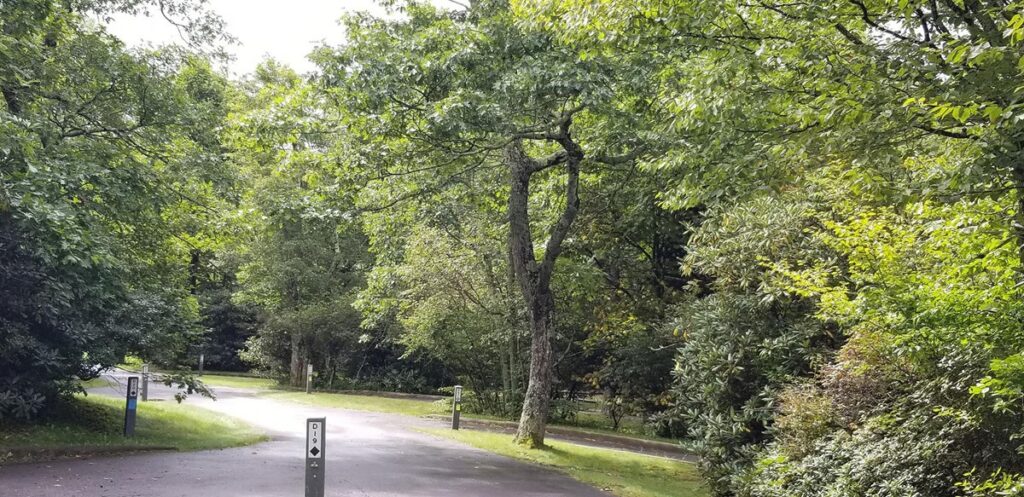
Sitting at 5,000 feet elevation on the Pisgah Ridge near Asheville, this campground is cool even in July, making it the go-to retreat for locals escaping the summer lowland heat. The summit trail to Mount Pisgah itself takes about 45 minutes and delivers a 360-degree view across rolling blue ridgelines.
Best time to visit: Late September through mid-October for peak colour. The elevation means the maples and beeches turn here a week to ten days earlier than the valleys below.
Nearest town: Asheville, 25 miles northeast — which means excellent food, craft beer, and gear resupply within easy reach.
Otter Creek Campground, Virginia
Near the southern end of the Parkway’s Virginia section, Otter Creek sits in a gorge beside a clear Appalachian stream. It’s quieter than the more famous campgrounds to the south and has direct trail access to the James River — one of the few places where a long-distance hiker on the Appalachian Trail crosses a major river at near sea level.
Insider tip: The camp store at Otter Creek is one of the last remaining operating concessions on the Parkway and makes a decent morning breakfast. Don’t count on it being open — but if it is, take the coffee.
Florida: Camping Between Two Worlds
Florida’s camping reputation suffers from its I-4 corridor image. The reality, particularly in the northern two-thirds of the state, is extraordinary.
Ocala National Forest, Florida
The Ocala is the southernmost national forest in the continental United States and the largest sand pine scrub ecosystem on earth. The Alexander Springs and Juniper Springs campgrounds sit beside crystal-clear, 68°F springs that flow year-round — making them one of the only places in North America where you can comfortably swim outdoors in January.
Best time to visit: November through March. Summer brings humidity and mosquitoes that require genuine commitment.
What makes it distinctive: The Florida National Scenic Trail passes through the Ocala, giving backpackers access to a 67-mile section of continuous backcountry through scrub, swamp, and piney flatwoods.
Insider tip: Rent a canoe at Juniper Springs Recreation Area and run the Juniper Springs Run — a five-mile, spring-fed canoe trail through head-high ferns and overhanging palms that feels tropical and entirely unreal. Shuttle service is included in the canoe rental.
St. George Island State Park, Florida
On the Panhandle, St. George Island offers nine miles of undeveloped barrier island beach — white quartz sand, Gulf-green water, and campsites within 200 metres of the surf. The eastern unit of the park is primitive and accessible only on foot or by bike, meaning the sites there offer the kind of beach solitude that’s increasingly hard to find anywhere in Florida.
Best time to visit: October through April. The Gulf water stays swimmable into November; spring migrant shorebirds begin arriving in March.
Practical note: The park is a 45-minute drive from Tallahassee and fills on spring and summer weekends. Weekday visits in the shoulder season are the move.
Pro tip: Florida’s state park reservation system at Florida State Parks reservations website opens exactly 11 months ahead. The best sites at popular parks like St. George vanish within hours of opening.
Arkansas and the Ozarks: The South’s Underrated Wildlands
Arkansas consistently surprises campers who stumble into it expecting nothing in particular.
Buffalo National River, Arkansas
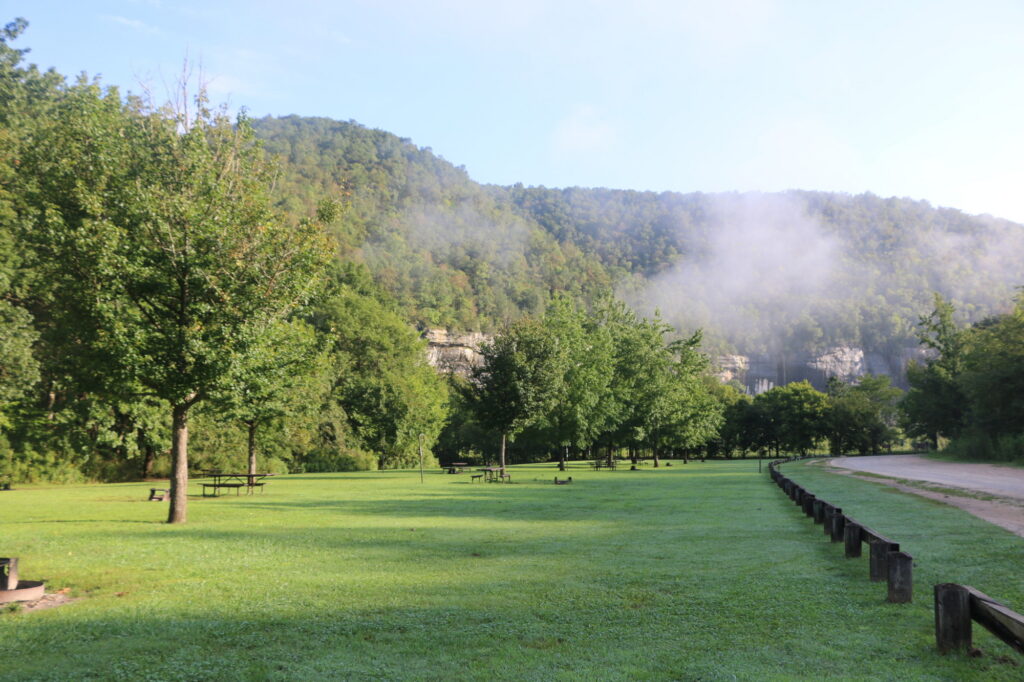
The Buffalo was the first National River designated in the United States (1972), and it protects 135 miles of a free-flowing Ozark river through steep limestone bluffs, clear pools, and dense hardwood bottoms. Floating the Buffalo — canoe or kayak, one day or five — is one of the defining camping experiences in the South.
Best time to visit: March through May for adequate water levels in the upper sections. The lower river floats well into summer.
Campground to know: Steel Creek, near the upper river, sits beneath a 400-foot bluff face called Big Bluff — the tallest natural bluff east of the Rockies. Morning light on that wall from a camp chair with coffee is something you’ll reference for years.
Who it suits: Strong paddlers for the upper section; beginners and families are better served by the gentler lower river near Buffalo Point.
Ouachita National Forest, Arkansas and Oklahoma
The Ouachita stretches 1.8 million acres across the Ouachita Mountains — a genuinely rugged range whose east-west-running ridges are geologically unlike any other mountain system in the South. The Ouachita National Recreation Trail runs 223 miles end-to-end across the forest.
Best campground: Lake Ouachita State Park sits on the western arm of Arkansas’s largest natural lake. Clear water, excellent bass fishing, and lake-view tent sites make it one of the most complete camping experiences in the region.
Insider tip: The Charlton Recreation Area on the Oklahoma side of the Ouachita is far less visited than the Arkansas campgrounds and offers the same terrain with genuinely empty trails on weekdays.
The Gulf Coast: Salt Marshes, Sea Oats, and Night Skies
Camping on the Gulf Coast is not just about beaches — it’s about the full coastal ecosystem: tidal marshes, live oak hammocks, barrier islands, and the flat, enormous sky that comes with being at sea level on an open coast.
Gulf Islands National Seashore, Mississippi and Florida
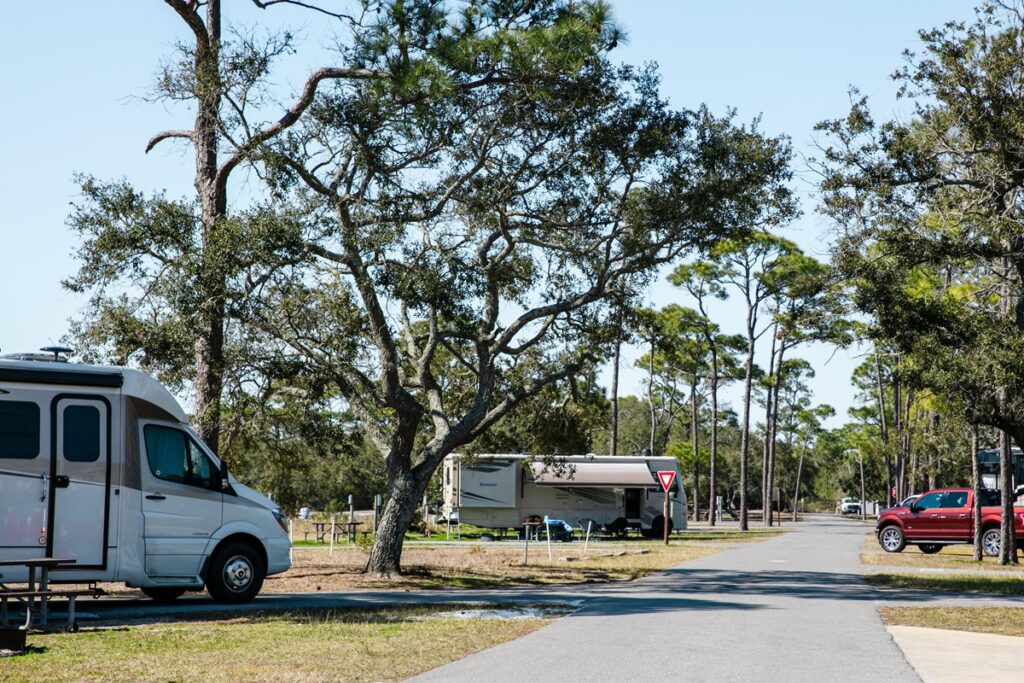
The Gulf Islands National Seashore protects a chain of barrier islands and peninsulas stretching from Cat Island, Mississippi to the Florida Panhandle. The Fort Pickens campground on Santa Rosa Island, Florida, is one of the great car-camping sites in the American South — two miles of white sand beach, a 19th-century masonry fort, and sunsets across Pensacola Bay that need no further description.
Best time to visit: October through April. Summer temperatures and humidity are formidable.
What type of camper: Fort Pickens suits car campers and RVs well. The primitive sites on Horn Island, Mississippi (boat or kayak access only) are for experienced backcountry campers seeking true Gulf isolation.
Nearest town: Pensacola, Florida, five miles across the bay. Full resupply and excellent Gulf Coast seafood.
Padre Island National Seashore, Texas
Technically the western fringe of the South, Padre Island protects 70 miles of undeveloped Gulf barrier island — the longest in the United States. The north end is accessible by paved road; the south requires a high-clearance 4WD vehicle and a willingness to navigate soft sand.
Best time to visit: October through May. Summer heat on an unshaded barrier island is extreme.
Unique draw: Kemp’s ridley sea turtles nest here. The park service runs an Adopt-a-Beach program and occasionally organises public releases of hatchlings — one of the more memorable experiences available to campers anywhere in the region.
For families planning a trip around the Gulf Coast or Appalachian campgrounds, our Camping with Kids guide has region-specific advice on managing logistics, gear, and site selection for younger campers.
Matching Campers to Southern Destinations
| Camper Type | Best Destination | Why |
|---|---|---|
| First-time tent camper | Elkmont, GSMNP | Well-maintained, safe, accessible, scenic |
| Family with young kids | Buffalo National River (lower) | Gentle paddling, swimming holes, short hikes |
| Solo backpacker | Ouachita National Recreation Trail | Long-distance trail, wild terrain, low crowds |
| Beach lover | St. George Island State Park | Pristine Gulf beach, state park infrastructure |
| RV traveller | Gulf Islands NS, Fort Pickens | Full hookup sites, paved access, amenities |
| Wildlife photographer | Cataloochee Valley, GSMNP | Elk rut, black bear habitat, dawn light |
| Paddler | Buffalo National River / Juniper Springs | World-class river and spring-run canoeing |
| Off-season minimalist | Ocala National Forest, winter | Near-empty springs, mild temps, no crowds |
Practical Planning Notes for Camping in the South
Seasons: The South’s best camping window runs October through April across the Gulf Coast and Florida. The Appalachians peak in May through June and September through October. Summer camping at altitude (4,000 feet-plus in the Smokies or Blue Ridge) is viable; summer camping at sea level in Georgia, Alabama, Mississippi, or Louisiana demands serious heat management.
Bugs: No honest guide to camping in the South omits this. Mosquitoes in coastal and lowland areas from May through September can be punishing. DEET or picaridin repellent, head nets in the worst terrain, and campfire-side evenings are your tools. Above 3,000 feet in the Appalachians, insects are rarely a serious issue.
Permits and reservations: Recreation.gov handles most national park, national seashore, and national forest site reservations. Florida State Parks use Reserve America. Both systems open bookings six months ahead. High-demand sites at peak-season weekends — particularly any GSMNP campground in October — disappear within minutes. Weekday camping and shoulder-season travel sidestep most reservation headaches.
Gear considerations unique to the South:
- A quality ground cloth or hammock is valuable across the wet Southeast
- River shoes or sandals for Ozark and Appalachian creek crossings
- A lightweight rain shell — afternoon thunderstorms arrive fast in summer mountains
- A quality cooler with ice capacity if camping in summer heat without a power hookup
For wilderness safety considerations specific to backcountry camping in unfamiliar regions, the Camping Safety Tips guide covers fundamentals around weather, wildlife, water, and navigation that apply across the South.
Conclusion: The South Rewards the Curious Camper
Camping in the South demands a willingness to look past the obvious and dig into the details. The payoff is a region of extraordinary ecological variety, long seasons, and — outside the major holiday weekends — a genuine sense of uncrowded space that’s increasingly rare in American outdoor recreation.
The Smokies in June firefly season. The Buffalo River at dawn with mist in the bluffs. A barrier island beach in October with nothing but sandpipers and the sound of small surf. These aren’t consolation prizes for people who couldn’t get to Yellowstone. They’re destinations in their own right, with their own logic and their own rewards.
Go in shoulder season. Book early. Bring bug spray for the lowlands. And pay attention — because the South has a way of quietly exceeding every expectation you arrived with.